The Players
I've been kicking around the idea of keeping a journal of things I do in the garage / around the house. My sister, Emily, keeps a journal of her woodworking journeys and while I was talking to her on the phone yesterday she encouraged me to start writing my own posts. With her encouragement and a successful day in the shop I figured now is as good of a time as any for my first post. Also, if you'd rather read good writing instead of my boring prose head over to her site.
The Setup
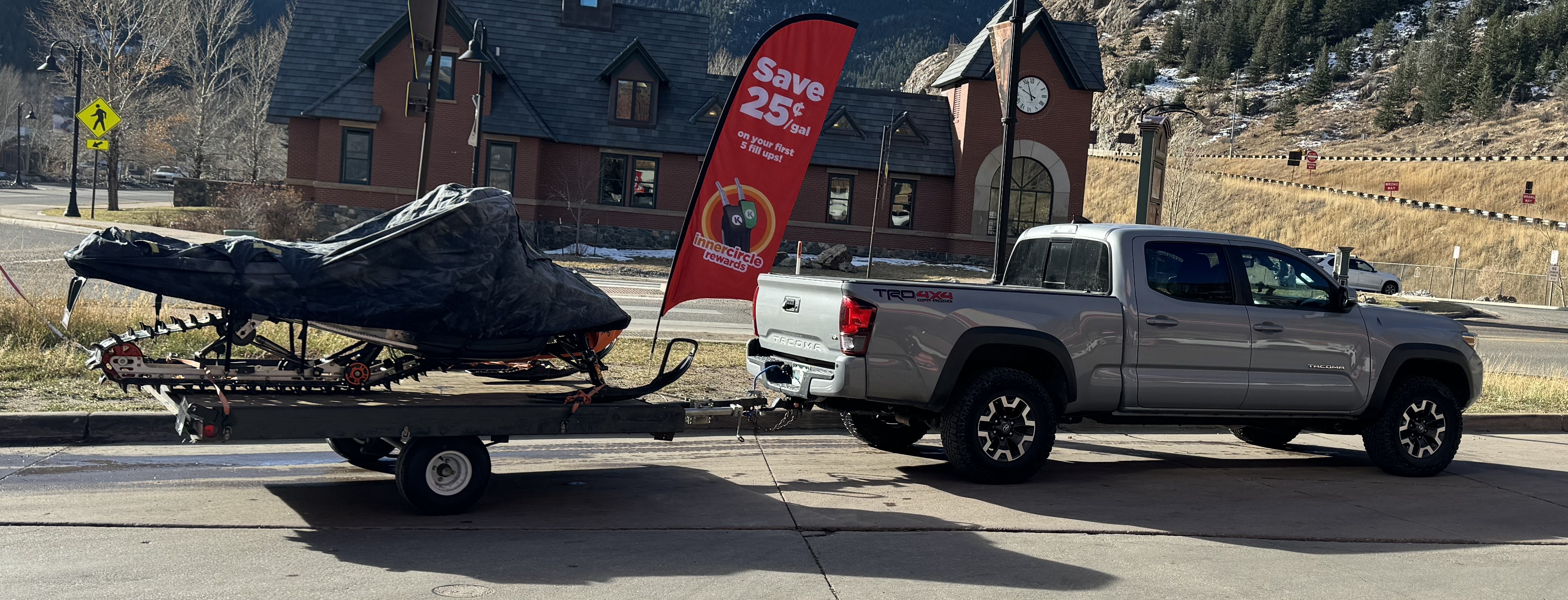
A fine feature of rural areas that get snow: rundown houses with even more rundown piles of decaying snowmobiles in the yard. In November of 2023 I had the great fortune of helping one of those people unload some of their junk. For $600 I picked up a barely running 2006 Arctic Cat M7 snowmobile.
The Hook
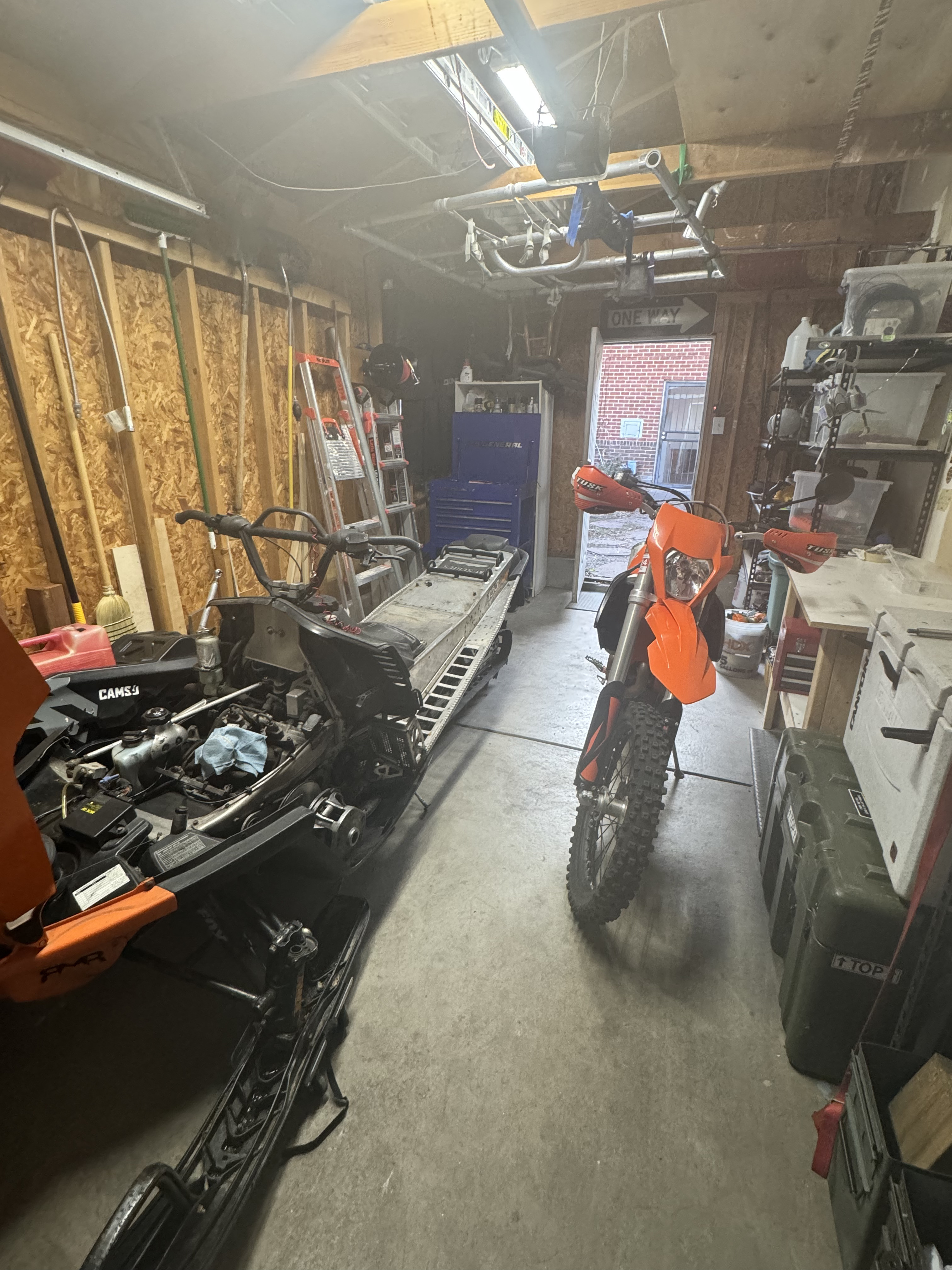
The new sled was in poor but serviceable condition. These sleds are known to be durable and there is decent availability of second-hand parts. So, I brought her home and tore in.
The rough plan was to clean up all of the 2-stroke oil splattered across the engine, install a new top end, cross my fingers, and be surfing pow by spring.
The Tale
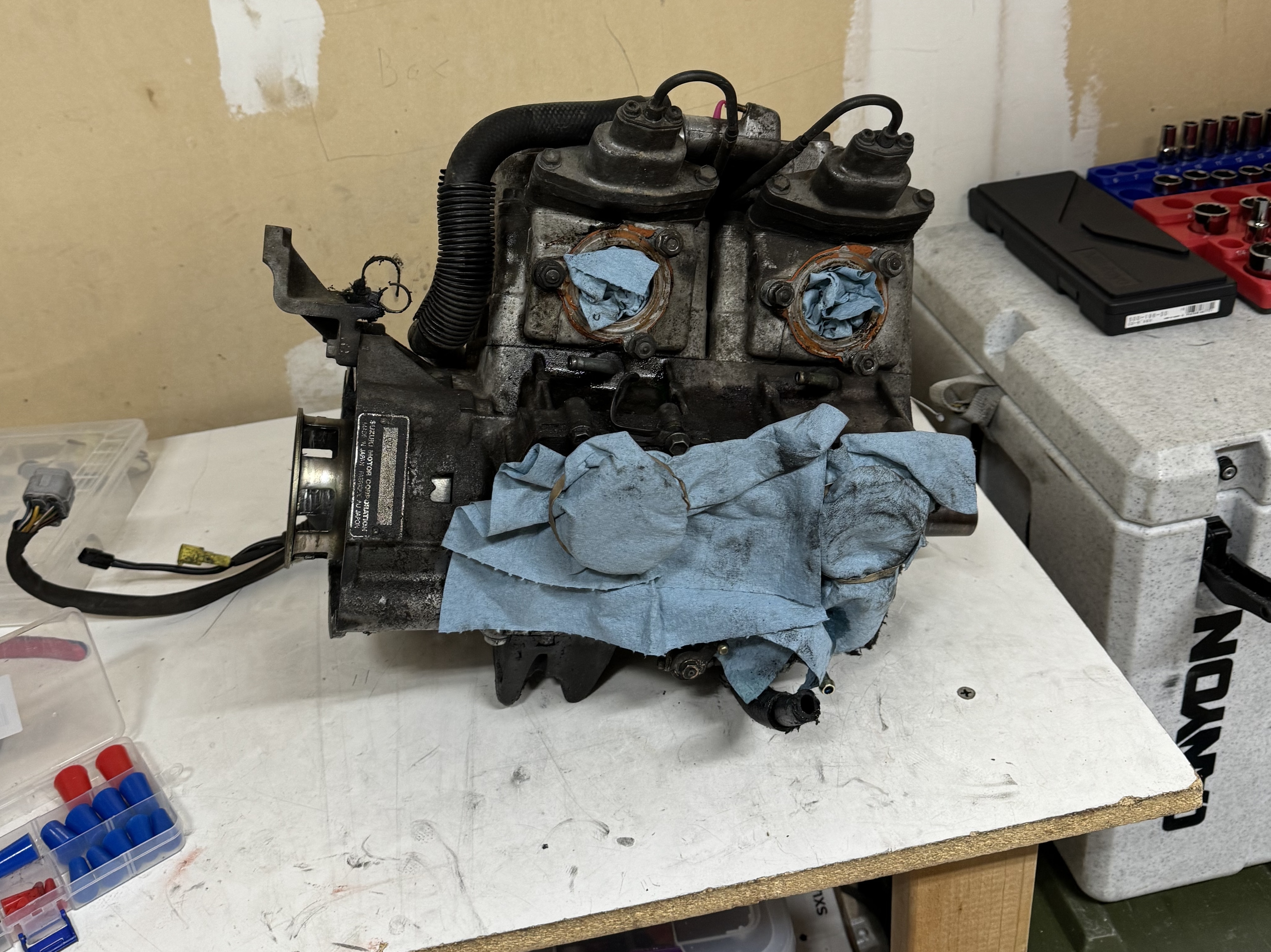
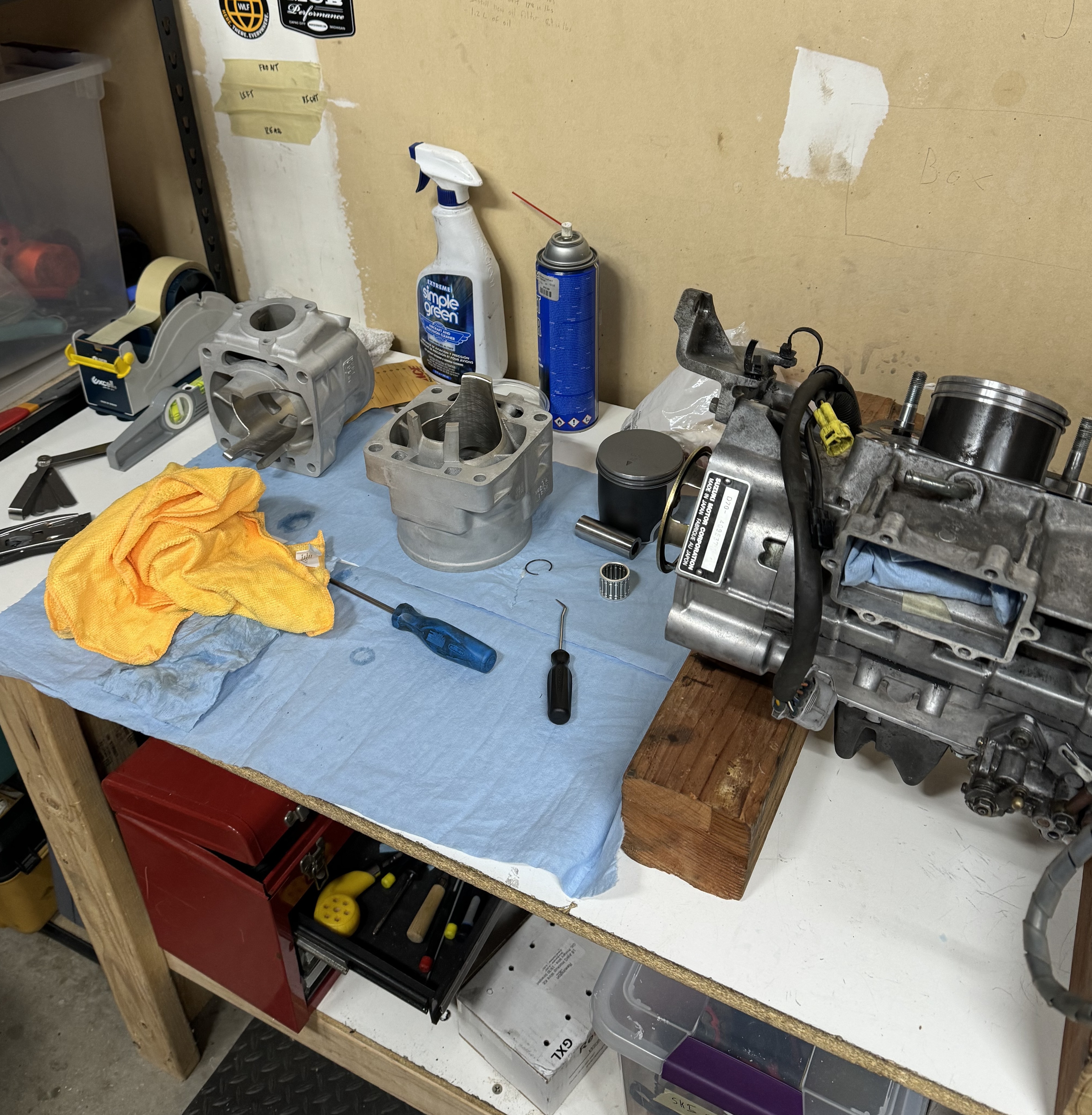
The project started with a bang. I got the engine out quickly. Cleaned it up and started disassembling. I swapped cylinder jugs for new ones. Put in new pistons. Replaced some old hoses. Yada yada yada. Breaking things apart is easy.
The Wire
Assembly is where I hit the wall. The clutches both needed to be rebuilt. The shocks were shot. And the engine had many suprises. When you rebuild a 2-stroke engine, you get everything back together, plug up all of the holes in the engine, pump some air in, and then see if/where air leaks out. The goal is for little to no air to leak out. This engine was leaking like a sieve. I could hardly pinpoint a single place to get started. Out came the high-temp silicone sealant. I unbolted much of the engine and slathered it all over. The leaks slowed but the engine was still losing too much air. More silicone. Fewer leaks. Rinse and repeat. Eventually I narrowed the final (and worst) leak down to a crack in the "y-pipe". That is the part of the exhaust that comes straight off of the cylinders. Doh. That's where all of the oil soaking the engine was coming from!
The Shut Out
This started an Olympic-caliber project detour. The section of exhaust that was cracked is no longer manufactured. The ones available on eBay looked equally as rusty as mine but I bought one anyway. It was cracked in the same spot. I've wanted to learn how to weld and this seemed like a great time to do it. I could learn a new skill and fix my project.
Denver has a very cool tool library. You can rent tools, take classes,
and meet like-minded folks. Weeks went by. The welding class came. I
took it and could barely get two pieces of metal stuck together. It
turns out welding is actually a skill that takes practice and not
something I could pick up in an evening (who would've guessed!?). I
decided I'd take the level 2 course to get more experience. More
dismal welds. I then bought a welder and
started practicing at home. When I finally felt like I was ready.
When I finally didn't feel like waiting anymore, I took my
preschool-level welding skills to my exhaust. What I would come to
learn is this exhaust is one of the more challenging welding tasks I
could've given myself. The metal is exceptionally dirty. It is cast
steel. The area I needed to weld was hard to reach. The weld needed to
be airtight. And I bought a TIG welder. TIG welders really dislike
dirty metal. For the non-welders, that is all a recipe for welding
to not go well. Add in my impatience and I just blew hole after hole
in the metal. What started as a minor crack turned into a yawning
cavern. I eventually got some metal glommed on. But, it was definitely
not air tight.
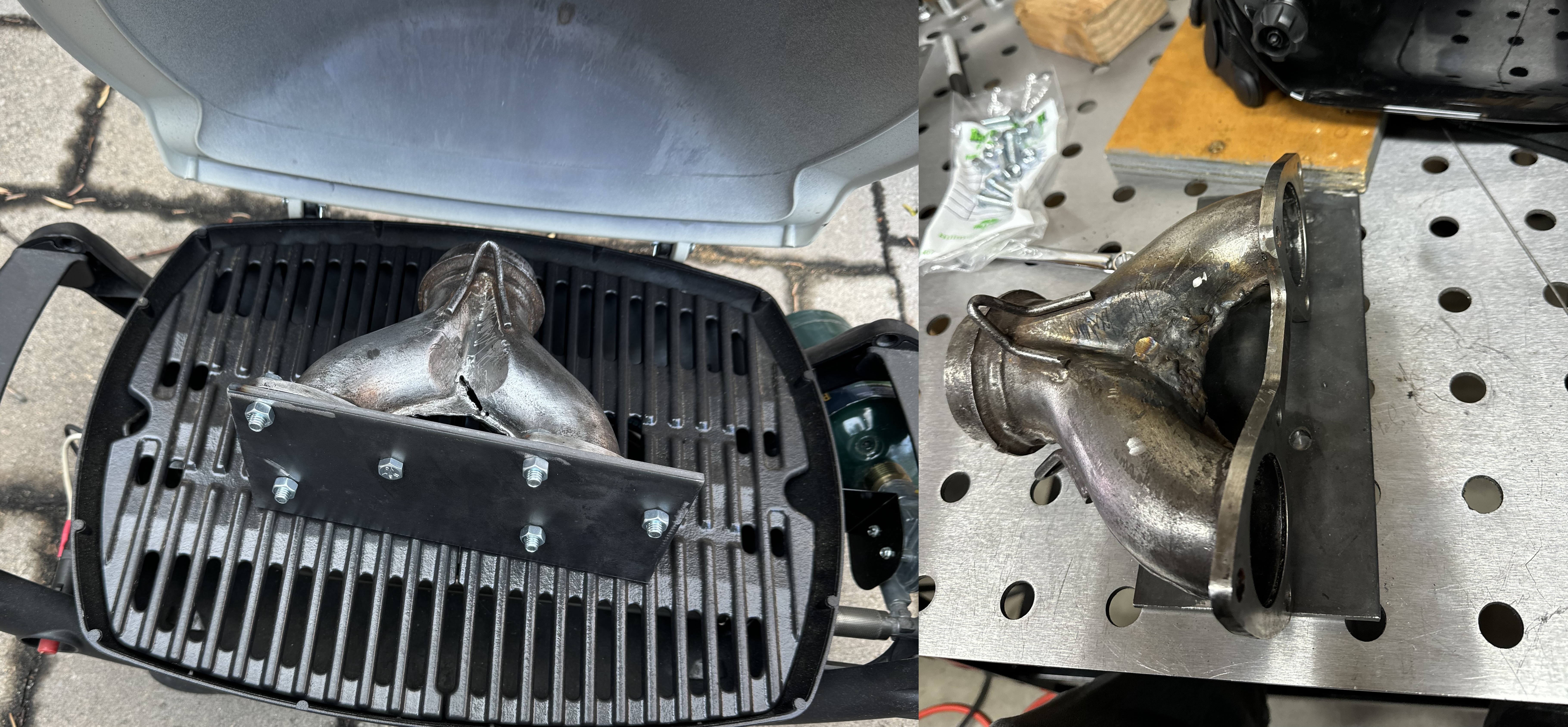
At this point I think winter had passed. I was sad about my welding journey and mostly left the snowmobile alone. Aside: A colleague recently asked me how I work on so many projects. My answer - by starting many and finishing few.
More time passed. I proposed to my girlfriend (now wife:)) and we moved to Fort Collins. The night before the movers came, I manically bolted things back together. Not before I had to unpack all of my tools I had neatly packed that day. If I was going to move this snowmobile it had to be put back together enough to be strapped to a trailer and driven 60 miles.
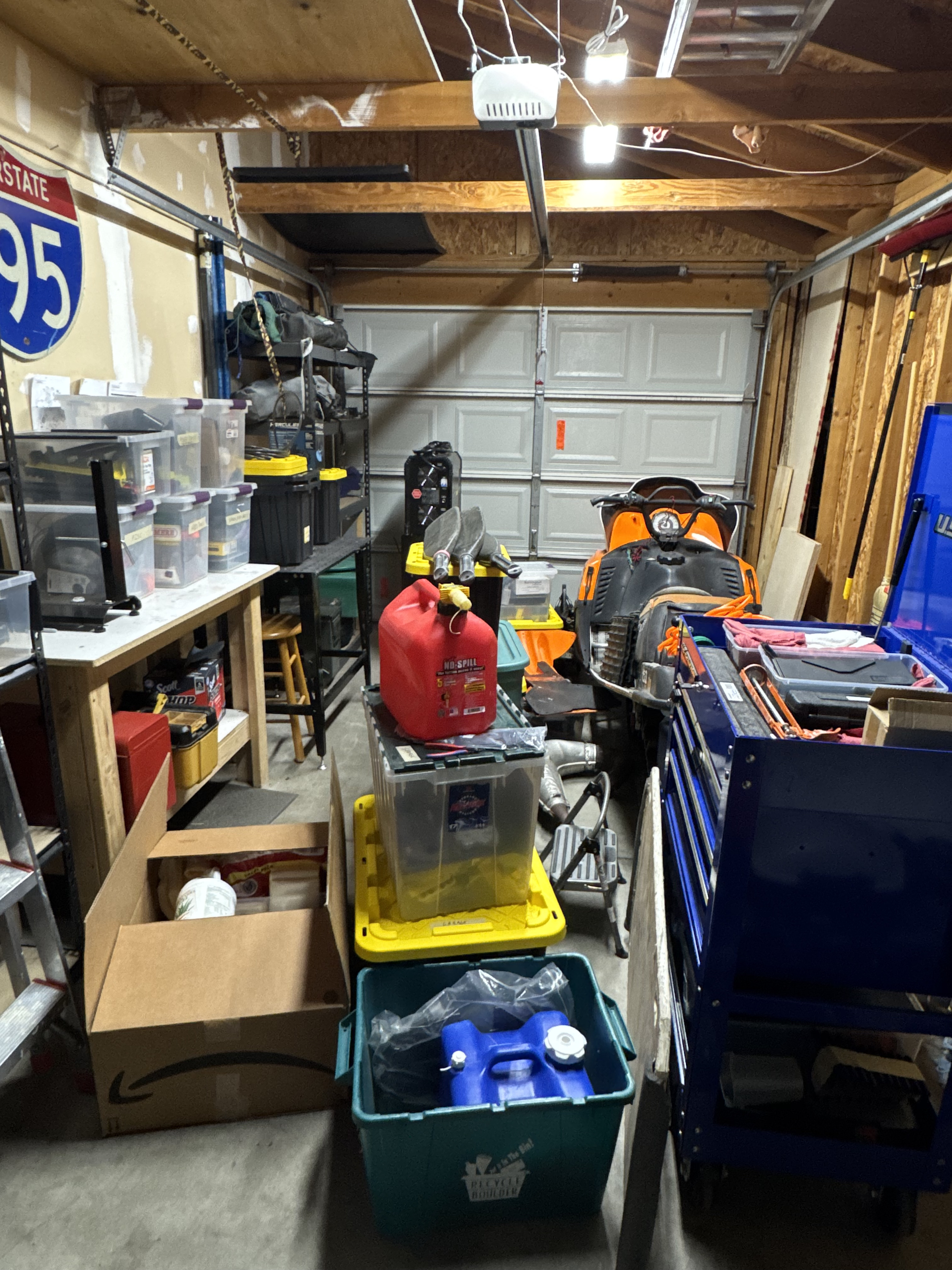
Upon arriving in Fort Collins, the snowmobile sat for another winter collecting dust. Too many new house projects to distract myself with.
The Sting
The weekend before last I decided enough time had passed. No more distractions. It was time to get the snowmobile running or sell it. I bit the bullet and found a company selling a new upgraded exhaust. I ordered it and a few other odds and ends and was off to the races. I really wasn't that far from getting this snowmobile running. All told it took me two Sundays to get everything back together.
Here it is on first start. Volume up.
Thanks to Em for the encouragement to write this. It brings me a great deal of happiness on a weekend when I'm out in the shop to think of her and know she's probably in her own garage lost in a project as well. And thanks to my neighbors for putting up with the noise and smoke. Don't show that video to the EPA.
Lessons learned - Job 1 is "job done". My wife likes to describe most of my shop time as "low priority tasking." I did an ungodly amount of that in this project. I should've written a todo list every day and stuck to it. - Don't mix projects. To save myself a couple hundred dollars on an exhaust pipe I ended up spending several hundred dollars on classes and welding equipment. All to end up right back where I started. I wanted to learn how to weld. But, that should've been its own activity. I think it set my welding journey back by how frustrated I got. - A well-written shop manual is a work of art. The Arctic Cat shop manual I used had spectacular descriptions and a picture at every confusing step. I pray with all of my might that AI slop doesn't crush this industry. When embarking on a project, try to see if there is a good manual beforehand. It will make the whole thing a lot more fun. - Most important: Take a thousand pictures. As the years passed, I invariably forgot how things went together. Shop manuals are great but they can't go into every little detail. Being able to look back from many angles is extremely helpful. I even tried my hand at filming.